muehlbronner.de
DEEN

VoIP · Linux · Software · Hardware

Max Robert Mühlbronner

Senior Administrator Telephony, previously 17 years with the same telecom provider, most recently as Senior VoIP Engineer. I have been working with Linux for more than 20 years and run SIP networks with OpenSIPS, Kamailio and Asterisk. On the side I build my own tools: audio analysis, an ad-free video client and ESP32 boards that use radio to sense what happens in a room.

View projects Profile on LinkedIn

  • 20+years of Linux
  • 2009OpenSIPS certified
  • 6personal projects

01

Projects

What I build outside of work: tools for real problems, from audio analysis to radio sensors.

Störlab

Noise lab

Desktop tool for tracking down a faint tonal noise source at home: microphone FFT and spectrogram, a peak detector with long-term logging, test signals across several Bluetooth speakers and an auto mode that learns and watches tones. It has grown into a lab for speech and video analysis: speaker recognition, emotion, transcription and AI evaluation.

Störlab, analysis tab: spectrum, spectrogram and detector at 5303 Hz (test signal) Störlab, analysis tab: spectrum, spectrogram and detector at 5303 Hz (test signal) Störlab, voice stress analysis: three people recognized automatically, deviation per feature, emotion and history Störlab, voice stress analysis: three people recognized automatically, deviation per feature, emotion and history Störlab, video analysis: face detected and assigned as Mann 1 with voice and emotion
Analysis with a test signal (5303 Hz), person recognition on Mac voices, video analysis of an interview with Jimmy Wales (video: DelwarHossain & Rocky, CC BY 4.0)
  • 470+ Commits
  • v2.5 Release
  • Windows + macOS

PythonNumPy/SciPyPortAudioTkinterONNXWhisperClaude API

Flimmer

YouTube without ads

App for Windows, macOS, Linux and Android – and from version 0.5.18 on Google TV too: tested on a TCL TV, fully usable with the remote. Since 0.5.30 there is also a test version for iPhone and iPad, without the App Store. Flimmer fetches video data directly through YouTube’s internal API and plays it itself, so ads are never even loaded. With SponsorBlock, DeArrow, subscriptions without a Google account, live chat, mini player and signed auto-updates.

Flimmer on the Mac: video page with player and SponsorBlock barFlimmer on the Mac: video page with player and SponsorBlock bar
  • v0.5 current
  • Win · macOS · Linux · Android · Google TV · iOS

Tauri 2RustSvelteTypeScriptYouTube.js

TV-Zapper

A TV that changes channels by itself

A Google TV that zaps through the programme guide according to my interests and, when the ads start, switches to an ad-free channel on its own. It spots the ad break because private channels hide their logo during commercials: the FRITZ!Box receives the current channel in parallel as a second tuner, and the app on the TV checks the logo corner. Available as a Google TV app and as a Home Assistant integration.

The TV-Zapper app on the TV: ad bypass with fallback channels and log
The app on the TV: fallback channels, time limit and the rating of every channel
  • v0.4.20 current
  • Google TV app
  • Home Assistant
  • FRITZ!Box as 2nd tuner

JavaAndroid TVMediaCodecRTSPDVB-CPythonHome AssistantADB

Google TVtv-zapper-0.4.20.apk

ESP boards & WiFi sensing

Radio as a sensor

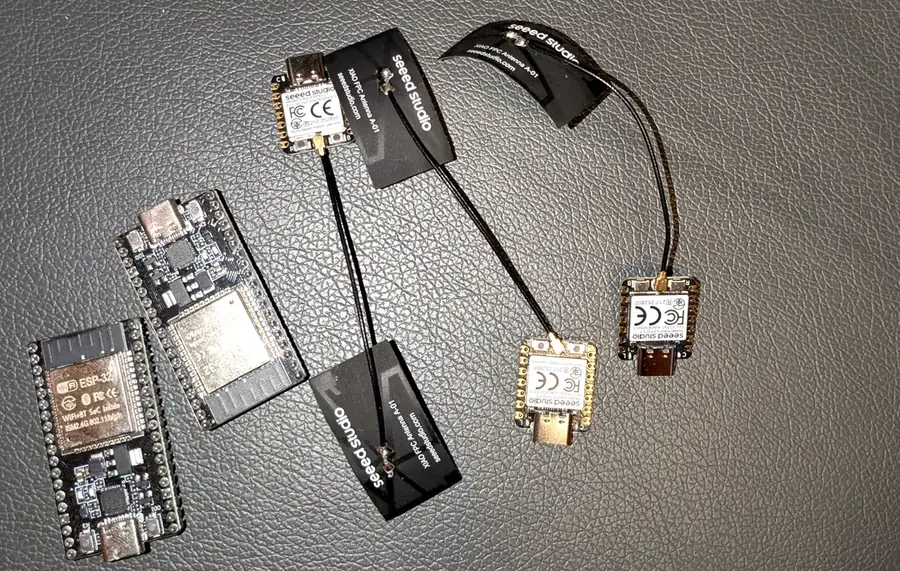
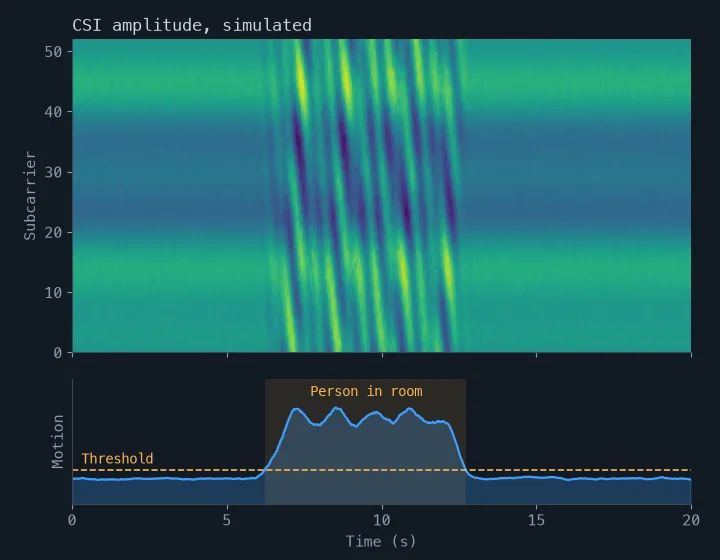
WiFi as a sensor: an ESP32 reads the channel state information (CSI) from every WiFi packet it receives – how strongly the signal arrives on each subcarrier. When someone moves in the room, these values change measurably. That makes it possible to detect presence and motion without a camera, even through walls. Plus an ESPHome component that brings the battery of a Fiido Air e-bike into Home Assistant over Bluetooth.

My boards: two ESP32 DevKits and three Seeed XIAO ESP32 with external antennas Symbolic illustration: WiFi from the router reaches the ESP32 directly and via ceiling and floor; a person disturbs the direct path Simulated CSI amplitude across 52 subcarriers: when someone walks through the room, the motion index spikes
Top: my own boards (ESP32 DevKits, Seeed XIAO with antenna). Below: the principle and simulated CSI data, symbolic
  • ESP32
  • CSI presence without a camera
  • Home Assistant

C++ESP-IDFWiFi-CSIESPHomeBluetooth LEMQTTCovert Channel

Smart home with Home Assistant

The whole flat in one hub

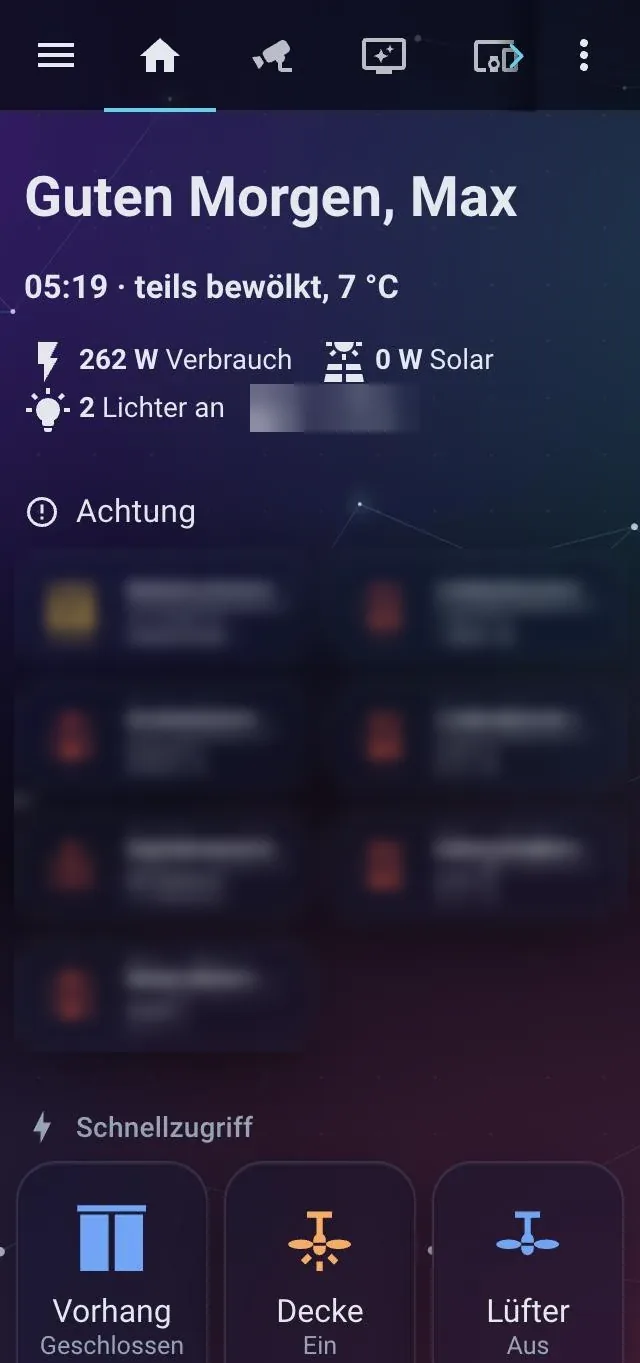
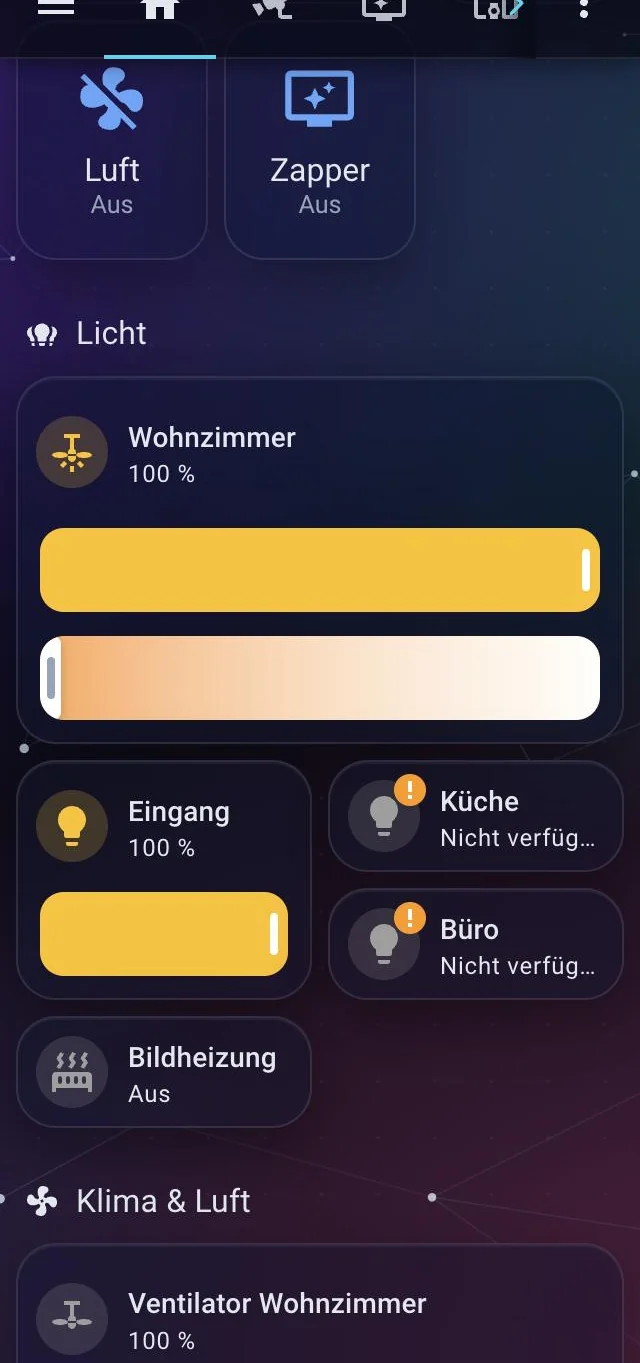
Home Assistant is the hub for my whole flat: lights, ceiling fan, curtain, dishwasher, robot vacuum, Ring cameras, smart meter and solar. I designed the dashboard myself, with a custom dark theme, a hand-drawn background and groups that only show what matters right now.

  • Own integration: TV-Zapper registers as a Home Assistant integration – zapping, ad bypass and every setting right from the dashboard.
  • E-bike: A custom ESPHome component reads a Fiido Air e-bike over Bluetooth – battery, speed, mileage, light and gear end up in Home Assistant.
  • WiFi sensing: ESP32 boards evaluate the WiFi channel state information and report motion to Home Assistant – research on presence detection without a camera.
  • Local instead of cloud: ceiling light and fan via Tuya Local, dishwasher via Midea LAN, a Smart Life curtain as a single button built from two scenes.
  • Automations: infrared panel heater on a schedule, Störlab test runs started over MQTT, alerts only when a window is open or a battery is low.
Home Assistant dashboard on a phone: greeting, power use, alerts and quick access on a dark neural-network background Light group with brightness and colour temperature sliders for the ceiling light TV-Zapper view in Home Assistant with switches, run time and dwell time
My dashboard on the phone: home view with alerts and quick access, lights with sliders, TV-Zapper controls
  • ESPHome
  • own integration
  • local not cloud

Home AssistantESPHomeYAMLJinjaMQTTBluetooth LETuya Local

NULLos

no BS. The operating system without bullshit.

My own operating system, written entirely from scratch – no Linux, Unix or any other borrowed base underneath. I had the idea as a kid; it started on 28 October 2026, and fifteen minutes later it showed its first prompt.

  • All home-made: UEFI boot loader, kernel, C compiler, shell and tools – only the start-up code is assembly, the rest is C.
  • Short and simple: commands with the shortest possible names – copying is c source target. The shell understands Bash scripts, Tab completes everything.
  • Runs everywhere: the goal is everything from an ESP32 without an MMU to a Raspberry Pi and a PC; today it boots on x86_64 from a USB stick or as a live CD (tested in QEMU so far).
  • Open to follow: nullos.de has the download, checksums, the docs (German) and every tool with its status – searchable, also by Linux or Windows names like cp or robocopy.
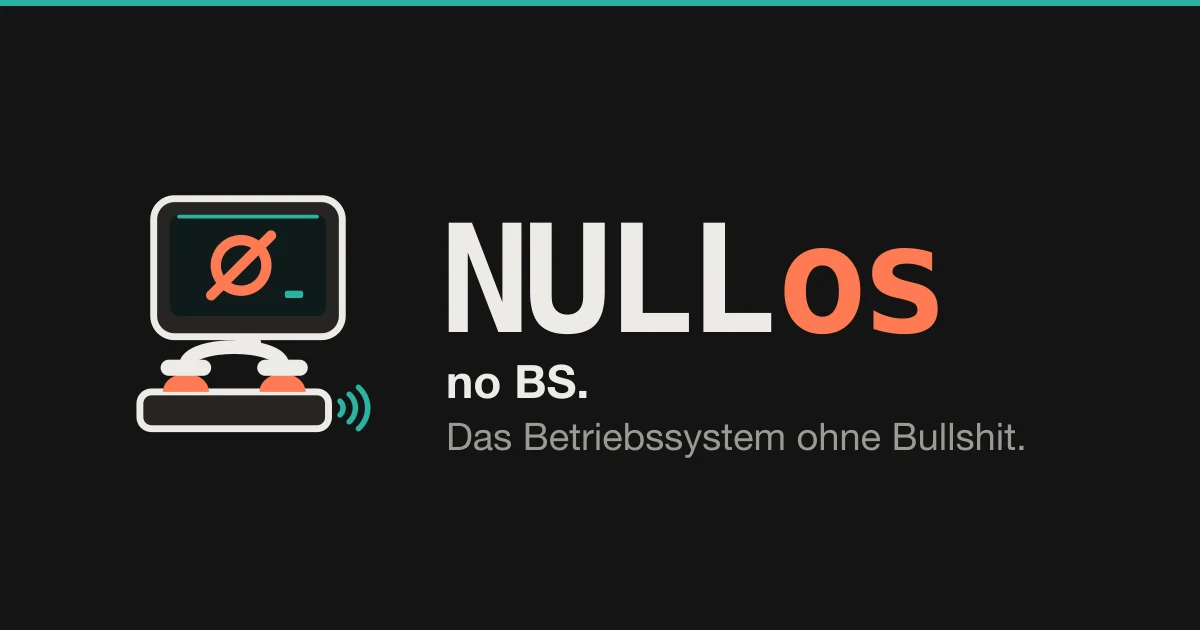
NULLos – no BS: logo with a screen and an acoustic coupler and wordmark
  • from scratch
  • x86_64 · UEFI
  • USB · live CD

CAssemblyUEFIx86_64own compilerQEMU

02

Skills

VoIP & telephony

  • SIP
  • SIP-Trunking
  • OpenSIPS
  • Kamailio
  • Asterisk
  • SEMS
  • Session Border Controller
  • NAT-Handling
  • High availability & load balancing
  • AudioCodes · Snom · AVM · Grandstream

Linux & Server

  • Debian
  • RHEL · CentOS · Fedora
  • Apache + PHP
  • DNS
  • Postfix · Exim · Courier
  • Dovecot · SpamAssassin · SPF
  • Web hosting
  • ModSecurity / DDoS protection

Virtualisation & operations

  • VMware
  • Xen
  • KVM clusters
  • Nagios
  • NetBox
  • Jira · Confluence
  • Git · SVN

Security

  • Security+
  • Information Security Management
  • Security Audits
  • OWASP

Development

  • C / C++
  • C#
  • PHP
  • Python
  • Rust / Tauri
  • Svelte / TypeScript
  • MySQL · MSSQL
  • AI-assisted development

Hardware & radio

  • ESP32 / ESP-IDF
  • ESPHome
  • WiFi-CSI
  • Bluetooth LE
  • Home Assistant · MQTT
  • Signal processing
  • DSL-CPE

03

Security

How secure are this site and your data? In short: there is nothing to steal here – no accounts, no database, no cookies. The server behind it is hardened anyway, because I take this seriously professionally. The figures come live from the server.

Live figures from the server, refreshed every 5 minutes – no IP addresses or visitor data.

Timeline

Attacks detected per day (last 30 days), by type.

    Attack types

    What the attackers tried (last 30 days) – with the technique from MITRE ATT&CK, the standard catalog of attack techniques.

      OWASP Top 10

      Rejected web requests (last 30 days), classified by the risk categories of the OWASP Top 10:2025.

        Targeted vulnerabilities

        Known vulnerabilities (CVE) that were specifically probed for (last 30 days). Most target software that doesn’t even run here – the server only delivers static files – but they show what attackers are currently looking for.

        VulnerabilityWhatAttemptsActively exploited (CISA KEV)Exploitation in 30 days (EPSS)

        Where the attacks come from

        Attacks detected (last 30 days) by country of the attacking IP address. It shows where the machines are – often hijacked servers or rented cloud instances – not where the people behind them sit.

        1. Loading …

        origin this server (Frankfurt, Germany) · drag to spin, tap a country to fly there

        The server sits in 1blu’s data center in Frankfurt am Main, connected to the internet via Lumen (formerly Level 3) and Colt. Day and night on the globe follow the current position of the sun. Country data: IP Geolocation by DB-IP.

        Networks

        Which networks the attacks came from (last 30 days) – almost always rented cloud servers or hijacked machines, not the attackers themselves.

          Time of day

          Attacks by hour (last 30 days, German time). Scanners work around the clock.

          Latest attacks

          Most recent detected attacks – time, type and country only.

            How the figures are made

            Detection: CrowdSec reads the SSH and web server logs and recognizes patterns such as password guessing, scans or attacks on known vulnerabilities. In addition, the server itself counts exploit attempts against known vulnerabilities by the requested address – including the many that go straight to the IP over port 80 and never reach the website. fail2ban additionally bans addresses that behave suspiciously. A community blocklist blocks known attackers before they even try.

            Classification: The techniques come from CrowdSec’s scenario descriptions (MITRE ATT&CK). The server assigns the OWASP categories itself based on the requested path. Whether a vulnerability is being actively exploited is taken from the catalog of the US agency CISA (KEV); FIRST estimates the probability of exploitation in the next 30 days (EPSS).

            Threat level: compares the last 24 hours with the daily average of the last 30 days – below 0.75× low, up to 1.5× medium, up to 3× high, above that critical.

            Privacy: Only counts, countries, networks and attack types are stored and shown – no IP addresses, no visitor data. For CISA and FIRST, only the CVE number leaves the server.

            Sources: CrowdSec · fail2ban · MITRE ATT&CK · OWASP Top 10:2025 · CISA Known Exploited Vulnerabilities · FIRST EPSS · NIST NVD · DB-IP

            Your data

            No cookies, no tracking, no embedded third-party services – fonts, scripts and images come from this server. Access logs are deleted after 7 days. Details in the privacy policy (German).

            Transport

            HTTPS only with HSTS, HTTP/2 and HTTP/3, a strict Content Security Policy with Trusted Types, no embedding in other sites. The light/dark switch keeps its choice in your browser.

            Nothing to steal

            A static site without a database, without logins, without PHP – the server only answers requests with files. Flimmer downloads redirect straight to GitHub.

            Defense

            CrowdSec with its community blocklist stops known attackers before they knock; fail2ban and a connection brake in the firewall stop scanners, floods and brute force.

            Access and hardening

            SSH with keys only and rate limiting, services in systemd sandboxes without privileges, daily integrity check of system files, security updates applied automatically.

            Limits, honestly

            A rented container at a hosting provider, not my own data center: against attacks that flood the line, only the provider can help. Everything else is craft – and that is done here.

            04

            Contact

            Questions about a project or interested in working together? Drop me a line.

            kontakt@muehlbronner.de LinkedIn GitHub